



Aluminum Armoring Strip vs. Shielding Tape
Updated: Nov. 26, 2026
An aluminum armoring strip and an aluminum shielding tape may both be used in cable manufacturing, but they perform different jobs. One is selected to provide mechanical protection around the cable structure, while the other forms a conductive layer that helps control electromagnetic interference (EMI) and radio-frequency interference (RFI).
The difference goes beyond material thickness. Cable armor is designed around mechanical requirements such as forming stability, strength, flexibility and resistance to external damage. Shielding tape is selected according to electrical conductivity, coverage, continuity and grounding requirements.
For cable manufacturers, choosing between these materials starts with understanding the cable construction. In some designs, only one of the two is required. In others, both are incorporated into the same cable, with each layer performing a separate function.
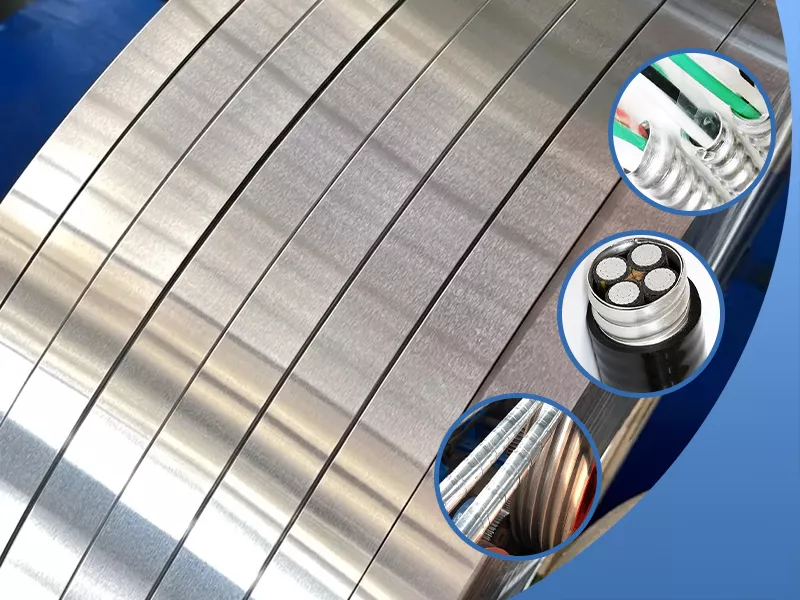
Aluminum Armoring Strip vs. Aluminum Shielding Tape: Differences
The main difference between aluminum armoring strip and aluminum shielding tape is the function each material serves within a cable.
Aluminum armoring strip is used to form a protective metallic layer around the cable core or inner sheath. Aluminum shielding tape is applied around conductors, conductor pairs or the cable core to provide electromagnetic shielding.
Although both materials may be supplied in narrow coil form, their performance requirements are not interchangeable.
Aluminum Armoring Strip
Mechanical protection. Selected for armor forming, strength, dimensional consistency, profile stability and slit-edge quality.
Aluminum Shielding Tape
Electromagnetic shielding. Selected for conductive coverage, electrical continuity, foil or laminate construction and grounding design.
| Comparison | Aluminum Armoring Strip | Aluminum Shielding Tape |
| Primary function | Mechanical protection | Electromagnetic shielding |
| Main purpose | Helps protect the cable against external physical damage | Helps reduce EMI and RFI interference |
| Material form | Relatively thick aluminum alloy strip | Thin aluminum foil, aluminum alloy strip or laminated foil |
| Typical construction | Interlocked, helically wrapped, formed or corrugated structures | Foil wrapping, longitudinal wrapping or laminated tape construction |
| Cable position | Generally around the cable core or inner sheath | Around individual conductors, pairs or the overall cable core |
| Main performance priorities | Strength, formability, flexibility and dimensional consistency | Conductivity, coverage, electrical continuity and grounding |
| Manufacturing process | Slitting, feeding, roll forming, wrapping and interlocking | Slitting, laminating where applicable, wrapping and electrical integration |
| Typical applications | Power, industrial and selected armored cables | Data, communication, instrumentation and signal cables |
| Key purchasing specifications | Alloy, temper, thickness, width, tolerances, slit edge and coil configuration | Foil thickness, laminate structure, width, coverage, overlap and grounding requirements |
An armor strip must maintain its dimensions as it passes through forming equipment. In an interlocking design, the strip is shaped into a profile that allows adjacent turns to engage with each other.
A shielding tape, on the other hand, must maintain the required conductive coverage around the cable components. Its performance depends on the complete shielding arrangement rather than simply the thickness of the aluminum.
What Is Aluminum Armoring Strip?
Aluminum armoring strip is an aluminum alloy material used to manufacture metallic protective layers in selected cable constructions.
Unlike an ordinary flat aluminum strip used for general fabrication, cable armoring strip is prepared for a specific forming and wrapping process. Its dimensions, mechanical properties and edge condition influence how consistently it runs through the production line.
Aluminum is often considered for cable armor where a lightweight, non-ferromagnetic metallic material is required. Depending on the cable design, it can help resist impact, compressive forces associated with installation or soil movement, and other external damage risks. Protection against rodent damage also depends on the armor profile, material thickness and complete cable construction.
Common alloy options for aluminum cable armoring include 5052, 5154 and 5154A. The appropriate grade and temper depend on the required armor profile, mechanical properties and forming conditions.
At Haomei, we pay particular attention to slit width, thickness consistency, edge condition and coil winding when processing aluminum strip for cable manufacturing. The objective is to supply strip material that matches the customer's equipment and production requirements, rather than focusing on alloy designation alone.
What Is Aluminum Shielding Tape?
Aluminum shielding tape is a conductive material used to form an electromagnetic shielding layer in selected cable constructions.
It is commonly associated with communication, instrumentation, data and signal cables where unwanted electromagnetic interference can affect signal quality.
Unlike cable armor, shielding tape is not primarily selected to withstand external crushing or impact. Its function is to provide a conductive layer arranged around the conductors or cable core according to the intended shielding design.
Depending on the cable construction, aluminum shielding materials may take several forms:
- Aluminum foil: A thin conductive layer used in foil shielding designs.
- Aluminum/polyester laminate: Aluminum foil bonded to a polymer film, commonly used in cable shielding constructions.
- Aluminum alloy shielding strip: A conductive aluminum strip used in selected cable designs requiring a different thickness or mechanical configuration.
- Adhesive-backed aluminum foil tape: Used in certain electrical and electronics applications, where adhesive properties are part of the product requirement. The adhesive may be conductive, such as a specified conductive acrylic, or a standard non-conductive adhesive.
How to Choose Aluminum Material for Cable
Selecting Aluminum Armoring Strip
- Cable structure and armor design Identify whether the finished cable uses interlocked armor, a formed strip construction or a continuously corrugated metallic sheath.
- Required mechanical performance Define the required protection, bending conditions, installation environment and finished-cable performance criteria.
- Alloy and temper Specify the aluminum grade and temper based on the mechanical requirements and forming process.
- Thickness and strip width Confirm the dimensions required by the armor design and forming equipment.
- Slitting accuracy and edge quality Check slit-width tolerance, edge condition and maximum allowable burr height.
- Coil configuration Specify coil ID, OD, weight, winding direction and other handling requirements according to the production line.
Selecting Aluminum Shielding Tape
- Shielding purpose Identify whether the cable requires individual pair shielding, an overall foil shield or another conductive shielding arrangement.
- Material construction Specify whether the design uses aluminum foil, aluminum/polyester laminate or aluminum alloy strip.
- Coverage and overlap Define the required coverage and overlap according to the cable diameter, wrapping process and applicable cable specification.
- Electrical continuity Confirm the required contact between the metallic layer, drain wire and grounding arrangement.
- Conductivity and thickness Specify electrical and material requirements rather than assuming that a thicker aluminum layer will always provide better shielding.
- Cable processing requirements Confirm tape width, winding direction, coil dimensions and any laminate or adhesive requirements.
Haomei Aluminum Strip Solutions for Cable Manufacturing
At Haomei Aluminum, we supply aluminum strip materials for cable applications where alloy selection, strip dimensions and coil configuration need to match the customer's manufacturing process.
Our cable-related material range includes 5052, 5154 and 5154A aluminum strip, along with selected 1060 material options. The appropriate alloy and temper depend on the intended cable structure and required properties.
Available supply configurations include conventional slit strip, interlocking armor strip and custom-rewound aluminum coils.
For selected shielding applications, we also supply conductive aluminum strip. The required material form and construction should be confirmed against the customer's shielding design.
Explore our aluminum strip for cable armoring page for alloy options, product forms and cable-related material specifications.
Custom Slitting and Rewinding
Wider aluminum coils are processed into narrower strips according to the specified width and manufacturing requirements.
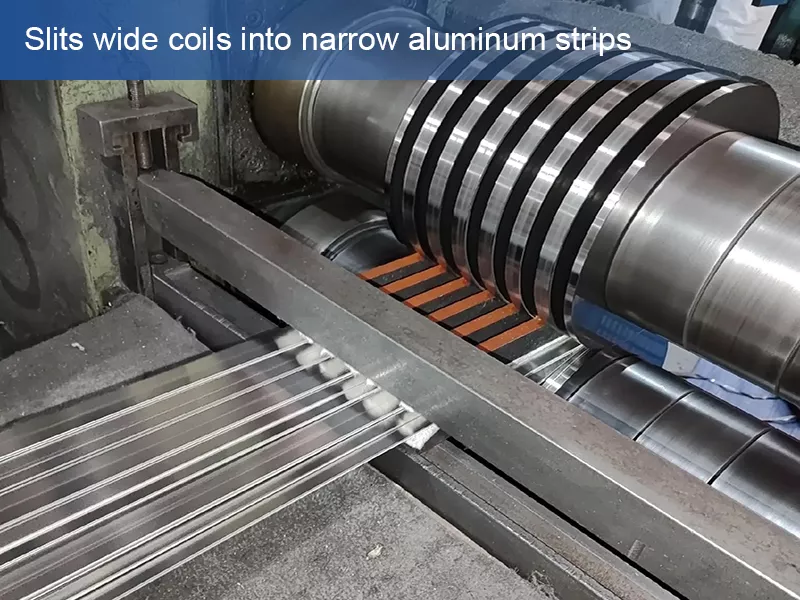
Haomei Quality Control for Cable Aluminum Strip
At Haomei, we focus on the processing details that affect material consistency and downstream production.
-
Thickness and Width Inspection
We check strip thickness and slit width against the confirmed order requirements.
-
Mechanical Property Verification
Material properties are reviewed against the specified alloy, temper and applicable order requirements.
-
Surface Quality Inspection
We inspect for visible scratches, contamination and other surface defects that may affect processing or product appearance.
-
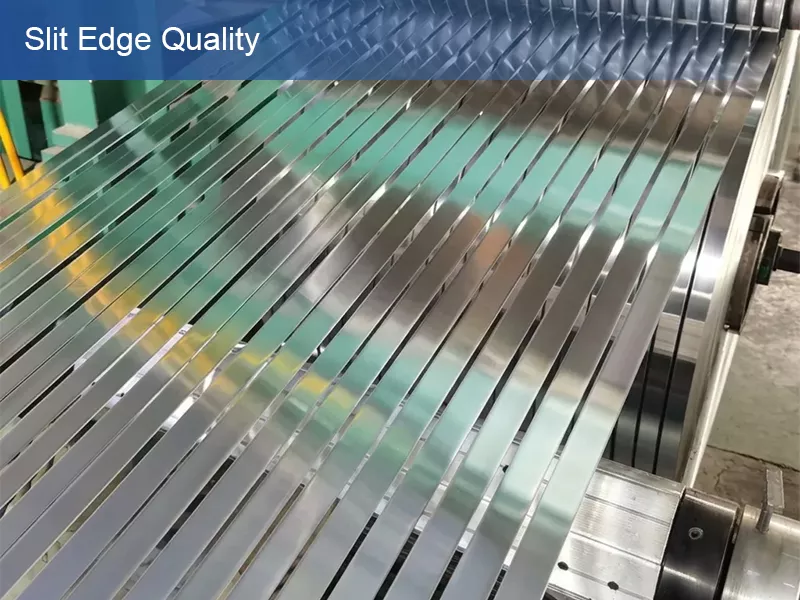
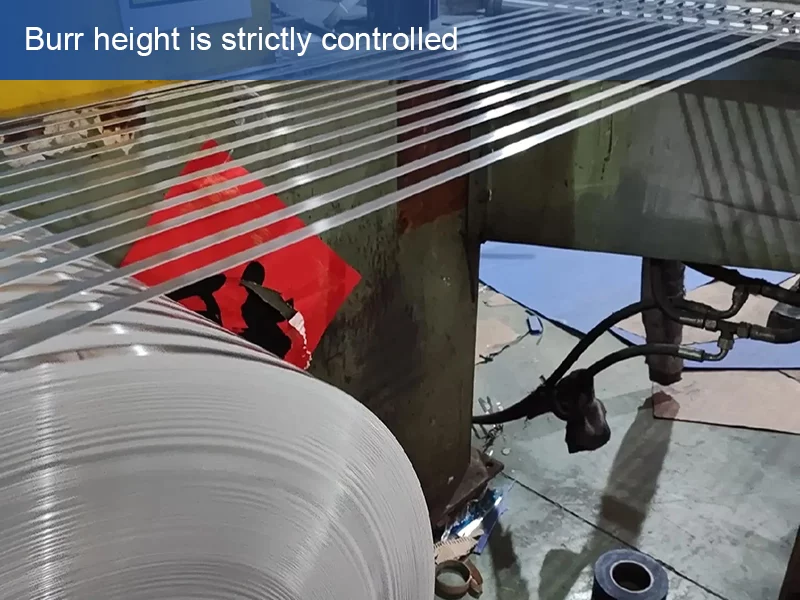
Slit-Edge and Burr Inspection
We check slit edges for burrs, edge damage and irregular cutting conditions. For narrow strips used in continuous feeding or forming, edge consistency is particularly important.
Discuss Your Cable Aluminum Strip Requirements
Contact Haomei Aluminum with your alloy, temper, thickness, width, tolerances, coil dimensions and required quantity for a technical review.
Email Haomei AluminumFrequently Asked Questions
What is the difference between aluminum armoring strip and aluminum shielding tape?
Aluminum armoring strip is used to form a mechanical protective layer around a cable, while aluminum shielding tape provides a conductive layer that helps reduce electromagnetic interference. Armor is selected mainly for mechanical performance and forming requirements. Shielding tape is selected according to conductivity, coverage, electrical continuity and grounding requirements.
Can aluminum shielding tape replace cable armor?
No. Ordinary aluminum foil or laminated shielding tape is not designed to replace a mechanical armor layer. It helps control electromagnetic interference but does not provide the same mechanical protection as a properly designed armor construction.
Can aluminum armoring strip provide EMI shielding?
Metallic aluminum armor may provide some electromagnetic shielding effects under certain conditions. However, its interlocked construction, electrical continuity and grounding arrangements may differ from those of a dedicated shielding system. It should not be treated as a qualified EMI shielding layer unless the complete cable design has been evaluated for that purpose.
Can armor and shielding be used in the same cable?
Yes. Some industrial, instrumentation and communication cables use a shielding layer around conductors or the cable core and an armor layer outside the inner sheath. The shield addresses electromagnetic interference, while the armor provides mechanical protection. The exact arrangement depends on the cable design.
Does aluminum interlocked armor make a cable waterproof?
Not automatically. Interlocked armor provides mechanical protection, but its interlocking seams do not create the same sealed structure as a properly designed continuously welded metallic sheath. Moisture resistance depends on the complete cable construction, including the sheath, sealing and outer jacket.
Which aluminum alloys are used for cable armoring?
Common options include 5052, 5154 and 5154A aluminum alloys. Haomei's cable-related product range also lists 1060 for selected designs. The suitable grade and temper depend on the required mechanical properties, forming conditions, cable design and applicable material specification.
What specifications should buyers provide when ordering aluminum armoring strip?
Buyers should provide the alloy, temper, thickness, strip width, dimensional tolerances, mechanical requirements, edge condition, maximum burr height, coil ID, OD, coil weight and quantity. A cable cross-section or forming-equipment drawing can also help clarify the required material.
How does aluminum shielding tape achieve electrical continuity and grounding?
Electrical continuity depends on the shielding construction and the way the metallic layer is connected to the grounding system. In a common foil-shielded cable design, a drain wire is placed in electrical contact with the foil. The shield and drain wire must then be terminated according to the cable's grounding and EMC requirements.