



Haomei Aluminum supplies aluminum strip for cable armoring in 5052, 5154 and 5154A alloys. Designed for cable constructions requiring a lightweight, non-magnetic metal protection layer, our strips are available in thicknesses from 0.15 mm to 3.0 mm, with 0.3–0.8 mm commonly used in many armoring applications.
We process aluminum coils into specified strip widths and coil configurations for interlocking armor, helical wrapping and other cable protection structures. Material selection, temper, slit-edge condition and rewinding requirements are reviewed according to the cable design and the customer's production equipment.
What Is Aluminum Strip for Cable Armoring?
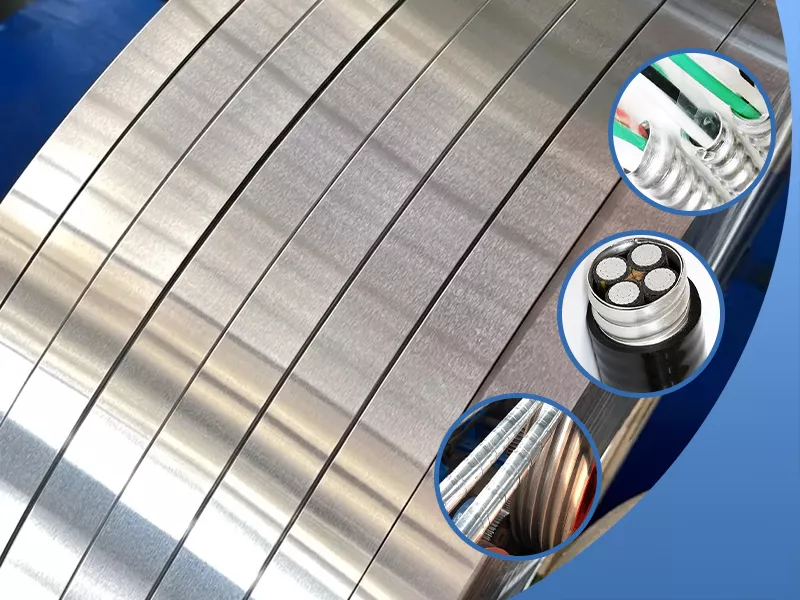
Aluminum strip for cable armoring is a rolled and slit aluminum or aluminum alloy strip used as a protective mechanical layer around power, control, communication and fiber-optic cables.
Depending on the cable construction, the strip is shaped into an interlocking profile, wrapped helically around the cable, or formed into a longitudinal protective sheath. The finished armor provides a physical barrier against external impact, abrasion, crushing forces, soil pressure and installation-related stresses. Rodent resistance depends on the complete cable armor design and should not be assumed from the strip material alone.
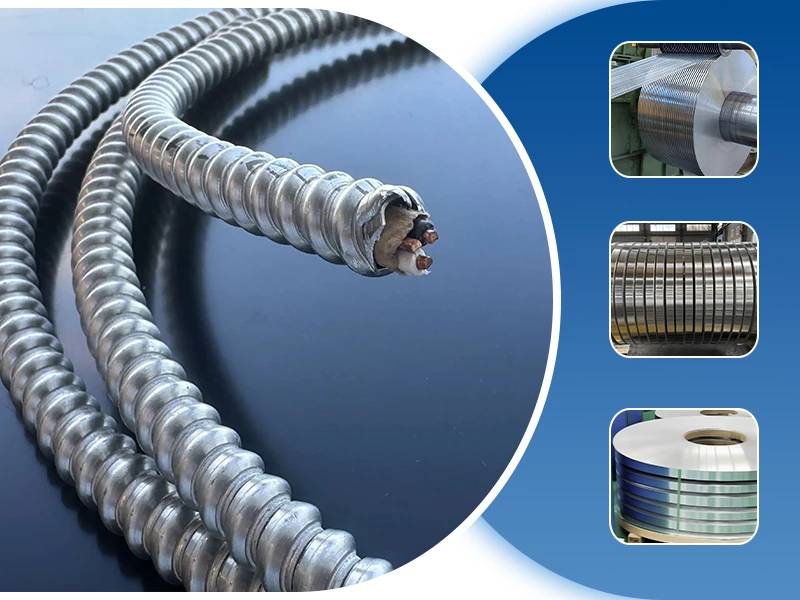
Compared with conventional steel tape armor, aluminum offers lower material weight, non-ferromagnetic behavior and good corrosion resistance. These properties make it suitable for selected underground, industrial, outdoor and electrical cable designs.
At Haomei, we focus on the material and processing requirements behind the finished cable. Strip thickness, width, temper, edge condition and coil configuration all affect how the material runs through the customer's armoring equipment.
Our supply range covers conventional aluminum armor strip, narrow slit coils and custom-rewound aluminum strip for cable manufacturing.
Key Advantages of Aluminum Over Steel Armor
The material choice depends on the cable's mechanical protection requirements, electrical design, installation environment and overall weight target.
Lightweight and Easier Handling
Aluminum has a lower density than steel. For cable constructions designed around aluminum armor, this can reduce armor-layer weight and make cable handling, pulling and installation easier. The actual weight difference depends on the finished cable construction and required protection level.
Non-Ferromagnetic Characteristics
Aluminum is non-ferromagnetic, making it a material option for cable designs where ferromagnetic steel armor is undesirable. This is particularly relevant to some single-core AC cable configurations. The complete cable design, including bonding, grounding and current-induced losses, still needs engineering review.
Corrosion Resistance
Aluminum naturally forms a protective oxide layer. This helps the material resist atmospheric corrosion and supports its use in damp, underground, coastal and other outdoor environments. Compatibility with adjacent cable layers and the surrounding environment should be evaluated for demanding service conditions.
Mechanical protection, including impact, crushing and rodent protection, depends on the finished cable armor geometry, thickness, construction and applicable cable requirements. Aluminum strip grade alone does not define the protection level.
Aluminum Alloy Options for Cable Armoring
Haomei supplies 5052, 5154 and 5154A aluminum alloy strips for different cable armor requirements. Alloy is only one part of the specification; temper, thickness, forming profile and required mechanical properties must also be considered.
5052 Aluminum Strip for Cable Armoring
5052 is a magnesium-alloy aluminum grade used in applications requiring a combination of strength, corrosion resistance and forming performance. For cable armor production, 5052 can be considered where the material specification and forming equipment call for this alloy. Its temper and thickness should be selected according to the required armor profile and mechanical properties.
Explore 5052 Aluminum Strip →5154 Aluminum Strip for Cable Armoring
5154 is another magnesium-alloy option for cable protection structures. It is supplied for projects specifying this grade and the corresponding mechanical requirements. When specifying 5154, the final temper, tensile properties and forming requirements should be checked against the cable manufacturer's material specification.
5154A Aluminum Strip for Cable Armoring
5154A is available for cable constructions specifically requiring this alloy designation. The appropriate material condition and product dimensions are confirmed according to the customer's drawings or technical requirements.
| Selection factor | What to confirm | Why it matters |
| Alloy | 5052 / 5154 / 5154A | Must match the cable specification and required properties. |
| Temper | O / H22 / H24 or specified condition | Affects strength and forming behavior; availability must be confirmed for the selected thickness. |
| Strength | Required tensile and yield properties | Confirms that the strip meets the cable design and applicable material specification. |
| Formability | Interlocking, helical or sheath-forming process | Helps determine whether the material condition suits the forming operation. |
| Service environment | Indoor, underground, coastal or industrial use | Supports review of corrosion exposure and cable-layer compatibility. |
For cable designs that specifically call for commercially pure aluminum, 1060 may be reviewed as a separate material enquiry. It is not one of the three primary alloy options featured on this cable armoring page and should not be treated as an automatic substitute for 5052, 5154 or 5154A.
Aluminum Strip Dimensions and Coil Specifications
The dimensions of aluminum cable armor strip depend on cable diameter, armor profile, strip-forming method and production-line configuration.
| Item | Haomei supply information |
| Product | Aluminum Strip for Cable Armoring |
| Main alloys | 5052 / 5154 / 5154A |
| Temper | O / H22 / H24; subject to confirmation for the selected alloy and thickness |
| Thickness | 0.15–3.0 mm |
| Common application thickness | Approximately 0.3–0.8 mm for many armoring applications; final thickness follows the cable design |
| Strip width | Customized. Listed narrow-width examples include 9.5, 12.7, 19 and 25.4 mm; wider formats are subject to processing confirmation. |
| Maximum listed width | Up to 1250 mm, subject to material and processing confirmation |
| Edge | Slit edge or round edge, according to the agreed specification |
| Surface | Mill finish; coated or embossed finish can be reviewed when specified |
| Supply form | Coil / slit coil / custom-rewound coil |
| Paper core ID | Listed options include 150, 200, 300, 400 and 508 mm; confirm the required size before ordering |
| Interlocking coil ID | 300–400 mm is a typical reference range shown for interlocking armor strip; final ID should match the customer's equipment |
| Coil OD and weight | Customized according to the customer's decoiler, handling limits and production requirements |
| Packaging | Moisture-resistant protection with wooden pallet or wooden case options according to shipment requirements |
Thickness and Width
Haomei supplies thicknesses from 0.15 mm to 3.0 mm. Thicknesses around 0.3–0.8 mm are commonly considered for many armoring applications. Thicker materials may be required for particular mechanical protection structures.
Strip thickness affects the mechanical properties and forming behavior of the finished armor. Width is related to cable geometry, wrapping method and forming equipment. Customers can provide an existing strip specification or drawing so that we can review the dimensions.
Coil Configuration
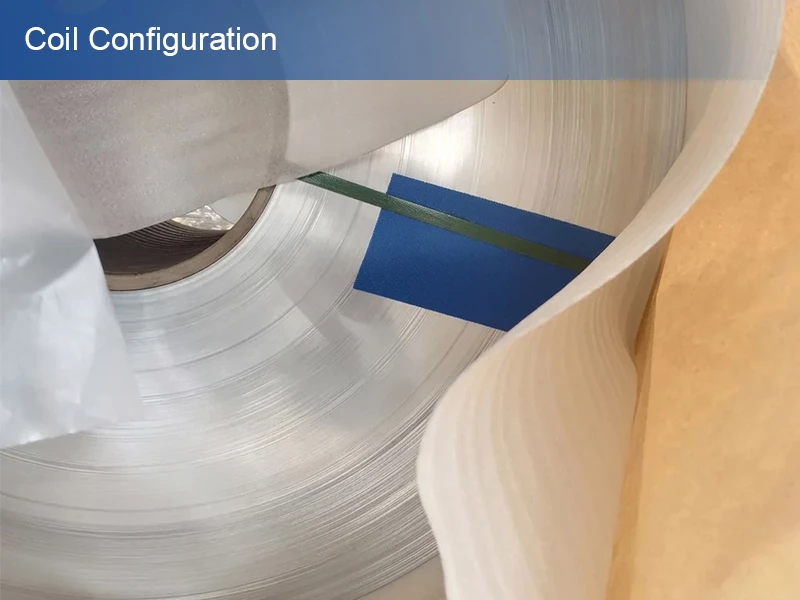
For continuous cable production, coil configuration is as important as strip dimensions. We review inner diameter (ID), outer diameter (OD), individual coil weight, winding direction, paper core or other core requirements, and compatibility with the customer's unwinding equipment.
For narrow strips, winding alignment and coil stability should be confirmed alongside the dimensional requirements.
Dimensional tolerances and burr-height limits are not universal values. Please state the required thickness tolerance, width tolerance and maximum burr height on the inquiry or drawing. Haomei will confirm the achievable acceptance criteria for the selected alloy, temper, thickness and width combination before production.
Aluminum Strip for Different Cable Armoring Methods
The same aluminum alloy strip can be used in different cable constructions, but each forming method places different demands on the material.
Interlocking Cable Armor
Aluminum strip is roll-formed into an interlocking profile that wraps around the cable. Strip width, thickness, temper and feeding stability are important to maintaining consistent profile engagement. This construction is used in selected armored cable designs, including flexible interlocking armor configurations.
Related search term: Aluminum Strip for Interlocking Cable Armor.
Helical Wrapping
The strip is wound around the cable in a spiral arrangement. The required width, overlap and material flexibility depend on cable diameter and the specified wrapping design. Coil unwinding, edge condition and strip consistency are relevant to continuous wrapping.
Longitudinal or Corrugated Sheathing
Aluminum strip is formed around the cable core into a longitudinal metal covering, which may be corrugated according to the cable structure. Material properties, strip width and edge preparation must suit the forming and joining process.
Haomei Aluminum Strip Manufacturing and Processing
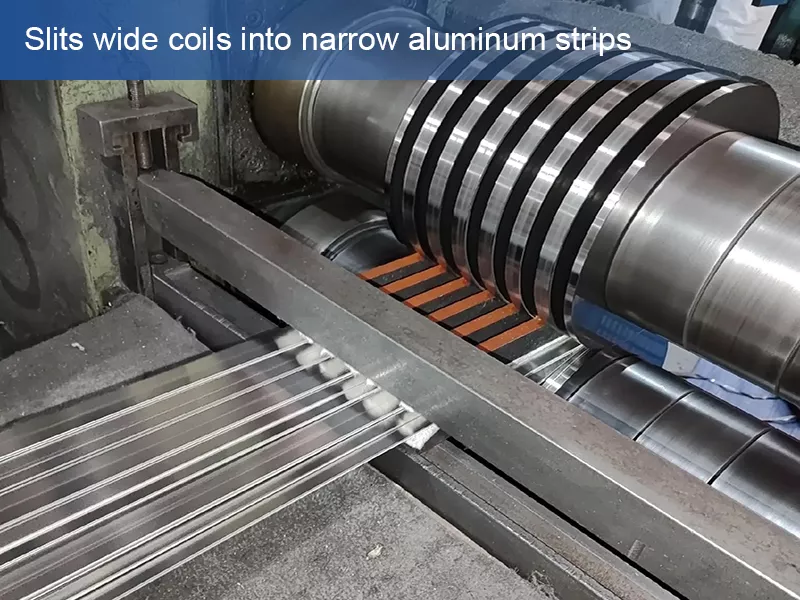
For cable manufacturers, consistent strip dimensions and reliable coil feeding are essential to continuous production. Haomei processes wider aluminum coils into narrower strips according to the required width and coil arrangement.
Our processing workflow focuses on dimensional requirements, slit-edge condition and finished coil quality. During slitting, we check for burrs, edge damage and irregular cutting. After slitting, individual strips can be rewound according to the required coil configuration.
Coil inner diameter, outer diameter, weight and winding arrangement can be specified to match the customer's production equipment. This allows us to supply both standard slit coils and customized aluminum strip coil formats for cable manufacturing.
Aluminum Coil Preparation
The parent coil is reviewed against the required alloy, temper and thickness before slitting.
Precision Slitting
Wider coils are slit into narrower strips according to the specified width and confirmed processing requirements.
Slit Edge Inspection
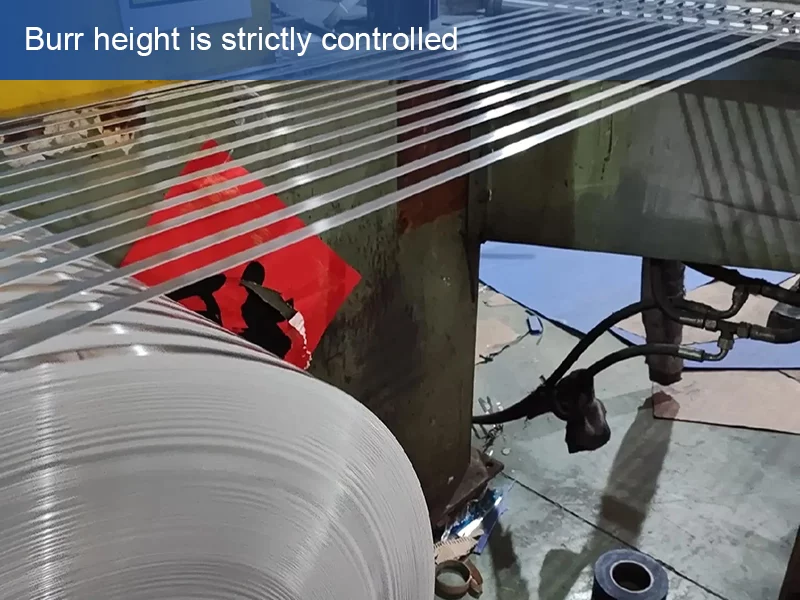
Cut edges are checked for burrs, irregular cutting and visible edge damage. Burr height and edge consistency are important for narrow-strip feeding.
Custom Rewinding
Slit strips are rewound to the specified ID, OD, coil weight and winding configuration to match the customer's equipment.
Finished Coil Inspection
After slitting and rewinding, finished coils are checked for dimensions, winding condition, surface appearance and packing requirements. The accepted inspection limits are based on the agreed order specification.
For cable manufacturers, this processing stage is important because edge defects or unstable winding may interrupt continuous feeding, affect forming consistency or create handling issues on the production line.
Haomei Quality Control for Aluminum Strip for Cable Armoring
A strip that meets nominal thickness and width requirements may still cause problems during continuous armoring if the edges, surface or winding condition are inconsistent. Haomei pays attention to the following inspection points.
Thickness and Width Inspection
We check strip dimensions against the confirmed order requirements. Dimensional consistency is important for stable forming and material feeding.
Slit Edge and Burr Inspection
We inspect slit edges for burrs, edge damage and irregular cutting. Required burr limits are reviewed according to customer specifications.
Surface Condition
We check for visible scratches, contamination and other surface defects that may affect subsequent forming or the appearance of the cable armor.
Coil Winding and Dimensions
We verify inner diameter, outer diameter, coil weight and winding arrangement against the specified configuration.
Final Inspection and Packing
Product properties and packing condition are checked against the agreed order specification before shipment.
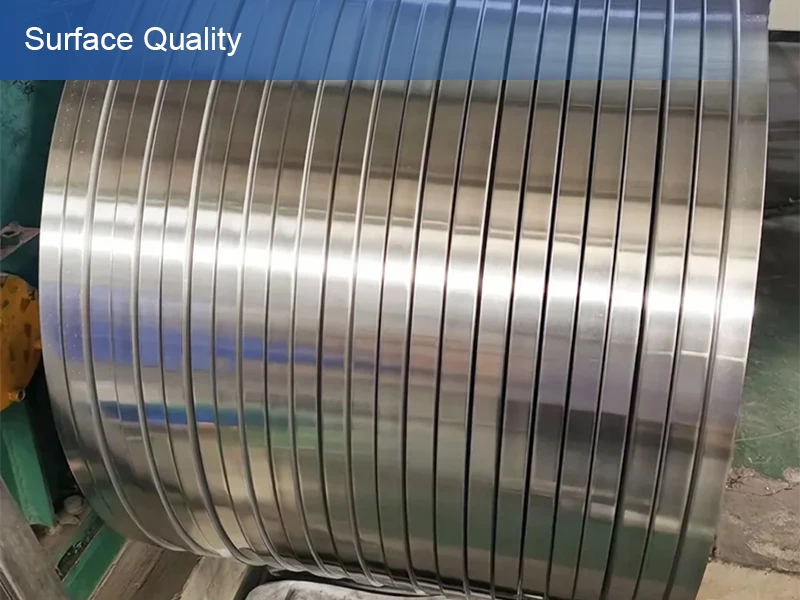
For narrow aluminum strip applications, we understand that slit width, burr height and rewinding consistency are not minor finishing details. They directly affect how the material is handled and processed on the customer's production line. Haomei checks these details against the agreed product and winding requirements.
If a project requires a numerical burr-height limit, special width tolerance, mechanical-property range or inspection report, include it in the technical enquiry. Numerical acceptance criteria must be confirmed for the exact alloy, temper, dimensions and applicable standard.
Applications of Aluminum Cable Armoring Strip
Aluminum strip is used in cable structures where mechanical protection, lightweight construction and corrosion resistance are required. The final material choice depends on the cable design and applicable performance requirements.
Power Cables
Used as an aluminum protective layer in selected power cable designs. Non-ferromagnetic armor may be specified for particular single-core AC cable constructions.
Control Cables
Used in cable structures requiring additional mechanical protection during installation and operation.
Communication Cables
Selected aluminum alloy strips can be incorporated into cable protection structures according to mechanical and electrical requirements.
Fiber-Optic Cables
Aluminum strip can be considered for protective metal layers in fiber-optic cable constructions where the design specifies an aluminum protective sheath or armor.
Industrial and Underground Cables
Aluminum armor materials can be used in selected outdoor, underground and industrial cable designs. Final suitability depends on installation conditions, mechanical protection requirements and the complete cable construction.
Related Aluminum Strip Products from Haomei
Armor strip, shielding tape and welding strip perform different functions in cable construction. The product specification should reflect the role of the material in the finished cable.
Shielding tape is selected for a conductive or electromagnetic shielding function; armoring strip is selected for a mechanical protection structure. These products are related to cable manufacturing but are not automatically interchangeable.
Aluminum Strip Coil Packaging for Cable Manufacturing
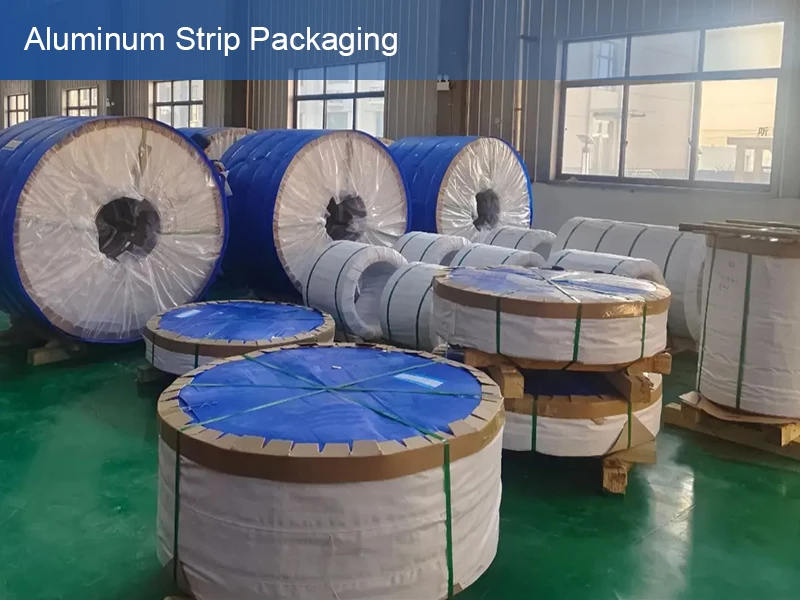
Haomei arranges packaging according to strip thickness, width, coil weight and transportation requirements. Each coil is protected against moisture exposure, surface abrasion and edge damage during handling and transportation.
Packaging can include moisture-resistant wrapping, edge protection, internal core support and reinforced wooden pallets or wooden cases, as specified for the shipment. Coil positioning and securing methods are arranged according to coil dimensions and handling conditions.
How to Specify and Order Aluminum Strip for Cable Armoring
To help us review the material requirements and prepare an accurate quotation, please include the following information. A cable drawing, existing material specification or sample-coil specification is particularly helpful when the strip will run through an established armoring line.
Technical Inquiry Checklist
- Aluminum alloy
- Temper
- Thickness and tolerance
- Strip width and tolerance
- Required quantity
- Maximum burr height, if critical
- Surface condition
- Coil inner diameter (ID)
- Coil outer diameter (OD)
- Individual coil weight
- Winding direction and configuration
- Intended cable construction
- Armor profile or wrapping method
- Production-line requirements or drawing
- Packaging and delivery requirements
Why These Details Matter
Alloy and temper confirm the material condition and the required mechanical properties.
Thickness and width help match the strip to the armor design and forming equipment.
Edge and burr requirements define the acceptable cutting-edge condition for safe handling and continuous feeding.
Coil ID, OD and weight help match the slit coil to the customer's decoiler, handling limits and production schedule.
Wrapping method or profile drawing allows the material requirements to be reviewed in the context of the finished cable structure.
Please provide a drawing or the existing material specification whenever possible. If any tolerance or inspection limit is critical, state its numerical acceptance value and measurement method before production.
FAQ – Aluminum Strip for Cable Armoring
Which aluminum alloys are available for cable armoring?
Haomei's main aluminum strip options for cable armoring are 5052, 5154 and 5154A. Selected cable designs may specify other grades, such as 1060, but these should be reviewed as separate material requirements. The appropriate grade depends on mechanical properties, conductivity, forming method and cable construction.
What thickness is available for Aluminum Strip for Cable Armoring?
Haomei's listed thickness range is 0.15–3.0 mm. Thicknesses around 0.3–0.8 mm are commonly considered for many armoring applications. The final choice depends on the required mechanical protection, cable construction and forming process.
Can aluminum strip be supplied for interlocking cable armor?
Yes. Aluminum alloy strip can be roll-formed into interlocking cable armor profiles. Material temper, thickness, width and edge condition should be matched to the profile design and forming equipment.
What is the typical coil ID for interlocking aluminum strip?
A 300–400 mm inner diameter is a typical reference range shown for interlocking armor strip. The final coil ID should be confirmed according to the customer's production-line and unwinding requirements.
Can Haomei supply rewound aluminum strip coils?
Yes. Slit aluminum strips can be rewound according to the required inner diameter, outer diameter, coil weight and winding configuration. Please provide the decoiler or production-line requirements when requesting a quotation.
What is the difference between aluminum armor strip and cable shielding tape?
Aluminum armor strip forms a mechanical protective layer around the cable. Cable shielding tape serves an electrical or electromagnetic shielding function within the cable design. Although both may be supplied in strip form, their material and performance requirements are different and they are not automatically interchangeable.
Can Haomei customize the width of aluminum strip?
Haomei can review customized thickness, width, temper and coil requirements according to the available processing range and confirmed technical specifications. Please provide the required width and tolerance before production.
Is aluminum strip suitable for single-core AC power cables?
Aluminum is non-ferromagnetic and is used in selected single-core AC cable constructions where magnetic steel armor is undesirable. The complete cable design, including bonding, grounding and current-induced losses, must be evaluated by the cable designer.
What is the difference between Aluminum Strip for Cable Armor and Aluminum Strip for Cable Armoring?
Both phrases are used to describe aluminum strip intended for cable armor applications. "Cable armoring" is common in British and international technical usage, while "cable armor" is also common in American English. The required material specification is determined by the cable design rather than the wording.
What information is needed to request a quotation?
Please provide alloy, temper, thickness, strip width, tolerances, quantity, coil ID and OD, coil weight, edge requirements and the intended cable armoring method. A technical drawing or existing material specification helps us review the order more accurately.
Can aluminum strip be used for helical wrapping and corrugated sheathing?
Aluminum strip can be considered for helical wrapping, longitudinal forming or corrugated sheathing when the cable design specifies these constructions. Strip width, temper, thickness and edge condition must be matched to the forming process.
Does aluminum armor automatically provide rodent protection?
No single strip specification guarantees rodent protection. The result depends on the finished cable construction, armor profile, thickness, closure and the applicable cable test or design requirements. These requirements should be confirmed by the cable designer.
Discuss Your Aluminum Cable Armoring Strip Requirements
Whether you require standard slit coils or customized aluminum strip for interlocking cable armor, Haomei can review the material grade, dimensions, edge requirements and coil configuration according to your production needs.
Send us your technical specifications to discuss the suitable aluminum alloy and supply arrangement.
The following Aluminum Strip for Cable Armoring may interest you
Further reading: Aluminum Alloy Cable Shielding Tape